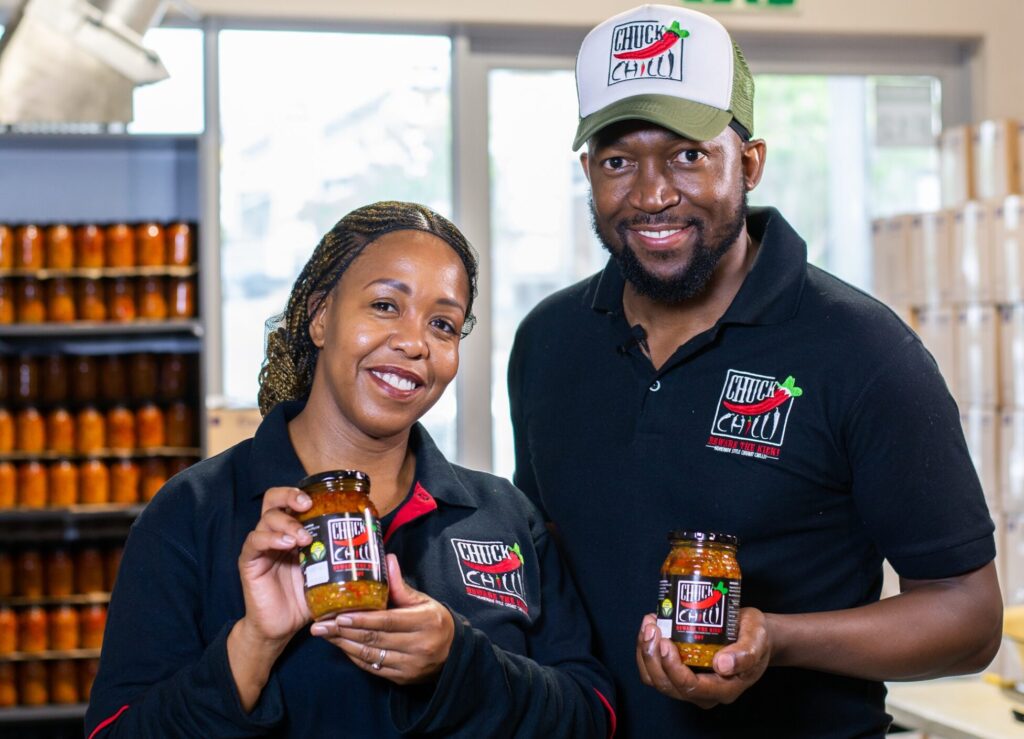
When Boikano Sikwane started making her family’s chunky chilli relish for friends and family, she never imagined that it would turn into a national food brand.
But in 2018, her future business partner, Tshepiso Manyoha, tasted the relish at a family gathering and asked Boikano to make him a batch. He took 24 jars into the office, and by the end of the day they were gone.
The response got them thinking that what Boikano had been making for family and friends could become a business. They formally launched Chuck Chilli Foods in 2019.
In the early days, almost everything was done by hand. Chillies were chopped to preserve the product’s distinctive chunky texture, vegetables were bought from the market, bottles sourced from a local packaging shop and labels printed at PostNet. Boikano worked on production during the day, while Tshepiso, who was still working full-time as an IT consultant, joined her in the evenings to cook, bottle and label the relish.
Getting the product into shops meant doing much of the legwork themselves. They sold at flea markets and approached independent Spar stores, restaurants and chisa nyamas with bottles in hand. Moving production out of the garage brought a new set of costs. They needed suitable premises, food certification and lab testing, while also finding the money to keep producing, as neither founder was earning a salary from the business.
A year after moving into their first formal production space, Covid hit.
Around this time, Chuck Chilli entered a Food Lover’s Market competition. They made the top 10 but did not win. A few months later, however, one of the buyers who had tasted the product during the competition called. He wanted to put it on the shelves. The order was for 15,000 bottles. At the time, Chuck Chilli was making around 300 to 500 bottles on a production day. They managed to deliver the order, putting Chuck Chilli on the shelves of one of the country’s major food retailers.
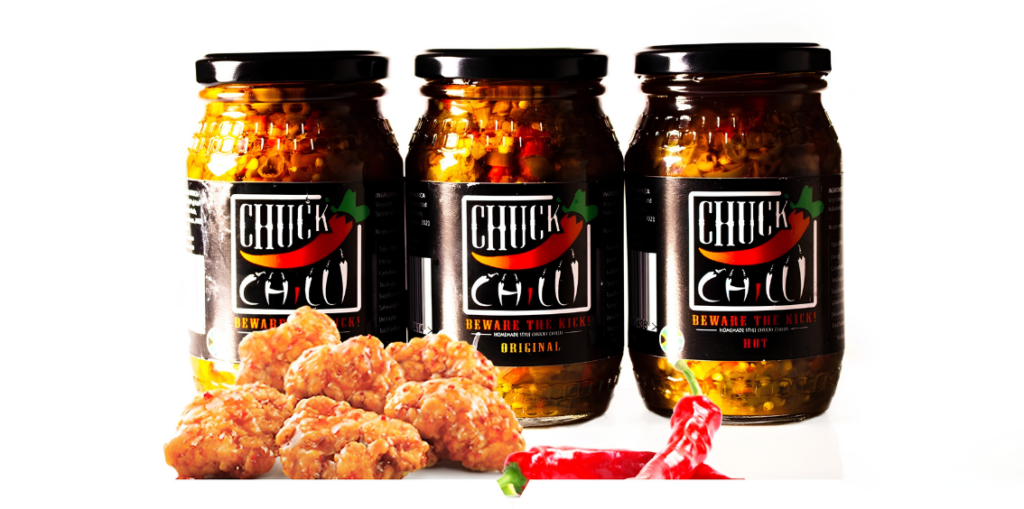
Over the next few years, the business continued to grow, as did the space it needed to operate. Its premises at the Riversands Incubation Hub grew from around 50m² to 80m² and eventually 150m².
Then, in 2026, Chuck Chilli received its biggest order yet. Pick ‘n Pay placed an order for 35,000 units, more than the business had previously produced in an entire year! Producing that many jars meant paying upfront for ingredients, bottles, packaging and labour before the retailer would pay Chuck Chilli.
Boikano and Tshepiso approached a traditional lender for finance, but the business did not qualify. Not wanting to outright reject the budding small business, the lender, referred them to alternative funder Sourcefin, where they were able to secure purchase order finance against the confirmed Pick ‘n Pay order. The funding covered the upfront costs needed to produce and deliver the 35,000 units, and set the business firmly on its way to sustainable growth.
Seven years later, Chuck Chilli has moved from its 150m² space at Riversands into a 400m² factory and is supplying major South African retailers. The business has also sent its first pallet to Dubai and has its sights set on further retail and international expansion. For Boikano and Tshepiso, they have a very different business from the one that started with 24 jars of homemade relish. Their story shows just how much potential exists in South Africa’s small businesses, and how the right funding, at the right time, can turn opportunity into success.