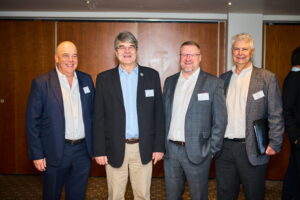

John Kennedy
Director and Head of Wealth Management, Citadel
or high-net-worth individuals and business owners stepping back from executive responsibilities, retirement is no longer viewed as a uniform, static event. Potentially spanning thirty to forty years, from age 60 to 95 and beyond, this final chapter of life represents a dynamic journey that requires disciplined financial execution rather than generic or fixed assumptions.
While many affluent individuals cultivate a clear vision of their post-career lifestyle, translating that vision into a sustainable financial framework remains an intricate challenge that requires expert financial planning.
According to John Kennedy, Head of Wealth Management at Citadel, a workable retirement plan must move beyond broad aspiration and vision towards a practical financial framework that takes into account the various lifestyle phases within retirement.
“Retirement is not a single, continuous phase,” Kennedy notes. “To ensure capital endures over a multi-decade horizon, individuals must first segment their wealth according to the distinct chapters of their retirement and then structure that capital to meet the competing demands of near-term cash flow and long-term capital preservation. A sustainable retirement depends on making clear, aligned decisions about your desired lifestyle, spending plans, sources of income, flexibility and shifting priorities over time.”
Citadel models retirement as three sequential stages, each defined by distinct priorities and expenditure patterns.
The active phase typically characterises the initial ‘honeymoon years’ of retirement, marked by vitality, independence and heightened discretionary expenditure on travel, exploration and new adventures. “In this active chapter, retirees enjoy surplus time, but this time in of itself often requires capital,” says Kennedy.
Over time, this transitions into a passive phase where individuals gradually slow down. Priorities naturally shift towards comfort, convenience and personal relationships, accompanied by a more localised lifestyle and lower discretionary spending.
Ultimately, individuals may enter a supported phase, requiring assistance from family or dedicated care facilities. While general lifestyle costs decrease, healthcare and specialised assistance expenses escalate substantially. “Here, the focus is on care, dignity and security,” Kennedy explains.
“Once someone has considered what they want their active, passive and supported retirement phases to look like, the next challenge is putting numbers behind that vision. Attempting to govern a thirty-year retirement with a single, static monthly budget is fundamentally flawed,” Kennedy adds. “By beginning with a blank canvas and assigning realistic figures to these three distinct chapters, retirees gain an objective roadmap of their future expenditure.”
Translating this roadmap into reality requires an intentional segmentation of capital between immediate drawdowns and future wealth preservation. A central dilemma for affluent retirees is determining how much they can safely spend in their initial years without compromising their lifestyle decades later.
“The central question retirees deal with is: How much can I afford to spend now without compromising my future?”
“A common misconception is the assumption that you need all your capital accessible immediately,” Kennedy observes. “In practice, capital must be segmented across distinct time horizons to match anticipated cash flows.”
Capital earmarked for the early years, specifically the next one to five years, should be held in liquid, predictable and capital-preserving instruments shielded from market turbulence. This guarantees lifestyle liquidity regardless of prevailing economic cycles. Conversely, surplus capital required five to ten years into the future should remain invested in growth-oriented assets, such as equities, where earnings growth outpaces inflation.
“Equities experience market fluctuations, but the best antidote to volatility is time,” Kennedy explains. “When near-term liquidity is ring-fenced, investors can comfortably withstand market cycles without making reactive, emotion-driven decisions.”
Rather than treating a financial plan as an inflexible, once-off projection, Kennedy recommends treating it as a dynamic navigation tool. “Much like a corporate enterprise relies on an executive dashboard to monitor performance, a household requires a financial dashboard to track progress against its goals,” he advises.
Reviewing this framework every one to two years, or whenever meaningful life circumstances shift, ensures that affluent families remain fully aware of whether they are overspending or underspending. “Health, family responsibilities, markets and personal priorities can all change over time. The goal is therefore not to predict every future outcome, but to build a plan that can adapt.”
Through disciplined capital segmentation, individuals can gain the clarity required to protect their financial independence while turning their retirement intentions into reality, enabling them to live a truly remarkable life.